OnlyFans Terms of Service: What Agencies Must Know
Learn the key OnlyFans Terms of Service rules agencies must follow, including prohibited content, compliance policies, creator safety, copyright and management.
Digital transformation has altered how adult content is both created and distributed. Nowadays, platforms like OnlyFans have become essential for models, influencers, and other content creators to establish their presence, with an account explicitly dedicated to adult material.
As agencies manage OnlyFans accounts for clients (including artists/performers, etc.), it is vital they understand not just how the site works but also its terms of service (TOS), along with policies covering personal information.
These rules exist to safeguard both subscribers and anyone uploading material; by ensuring no prohibited content reaches the platform via their clients, agencies comply with TOS provisions.
I'm going to walk you through the OnlyFans terms and conditions, but in plain English. We'll cover what's really banned, the legal traps you need to watch for, what you must do to keep your creators compliant, and how to handle it when the rules inevitably change.
What Is the OF Terms of Service and Why It Matters for Agencies
If you want to understand the world of OnlyFans and how agencies work, you need to know about the terms of service. When a creator uses OnlyFans, their account operates within its TOS.
These are particularly important because they specify the types of adult content that can be uploaded, outline rules for safeguarding personal information, and clearly define what is expected in terms of implementing a privacy policy.
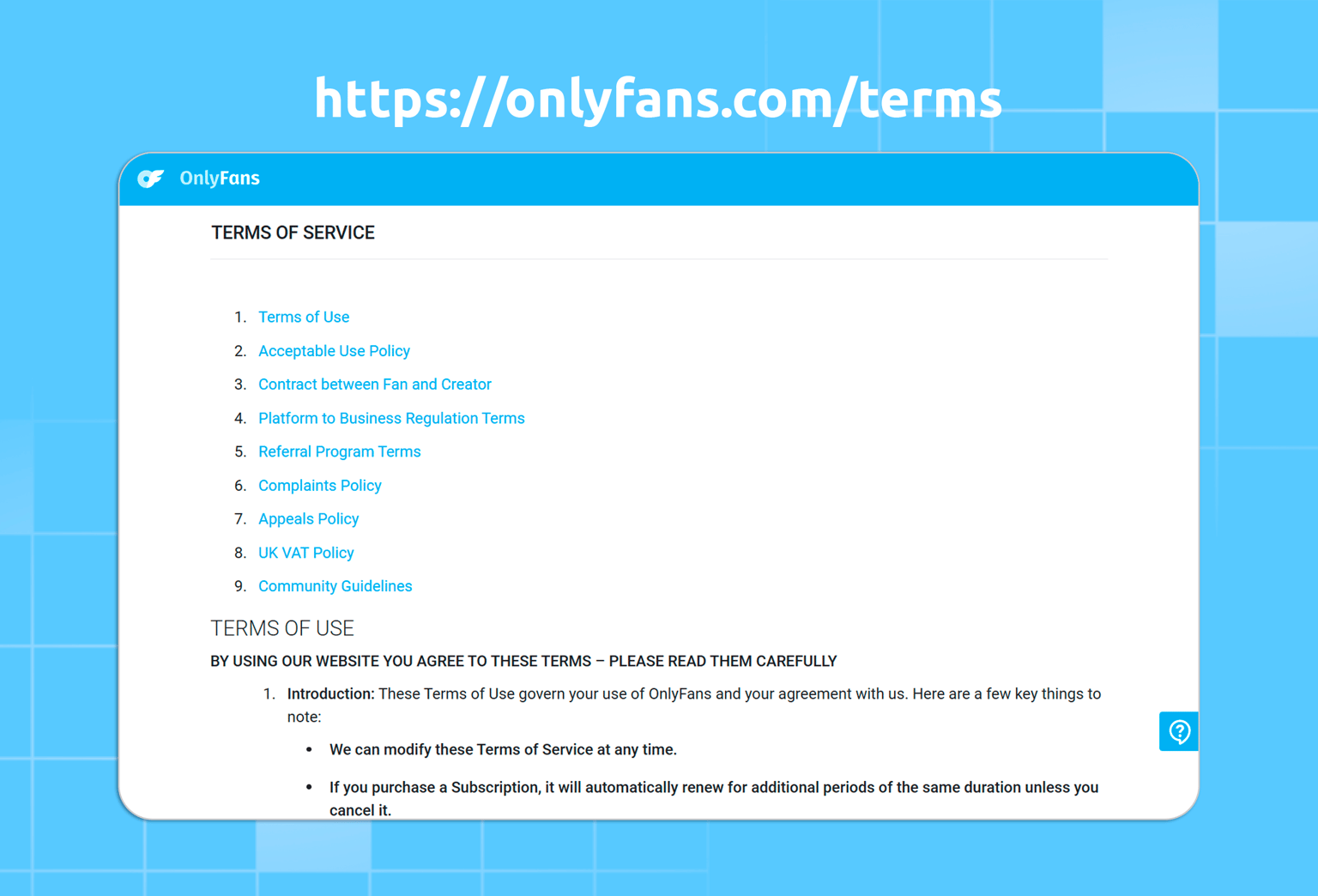 The page where you can read the OnlyFans Terms of Service
Agencies have to be aware of these provisions as well, because if subcontractors (creators) do not comply with them, it could reflect badly on the agency itself, plus it might mean the creator's account gets stuck.
The TOS also covers other important issues, such as copyright, what happens if someone else uses your pictures or videos, and any other necessary measures to prevent illegal activity on the site.
Agencies need to have a good understanding of what is covered under the umbrella term TOS, as this will help them work more effectively with their creators. It should also help agencies attract more subscribers in the long run.
Prohibited Content: Agency Monitoring and Prevention Strategies
Agencies are responsible for making sure that no forbidden material is uploaded onto OnlyFans. This involves an in-depth examination of all photographs, videos, and other kinds of content. The following are key areas that require close oversight.
1. Illegal and Extreme Content That Agencies Must Flag
Agencies need to be able to spot any photos or videos that depict illegal activities. This could be anything from terrorism to drug smuggling. If they see anything like this, they have to act straight away - before anybody else does.
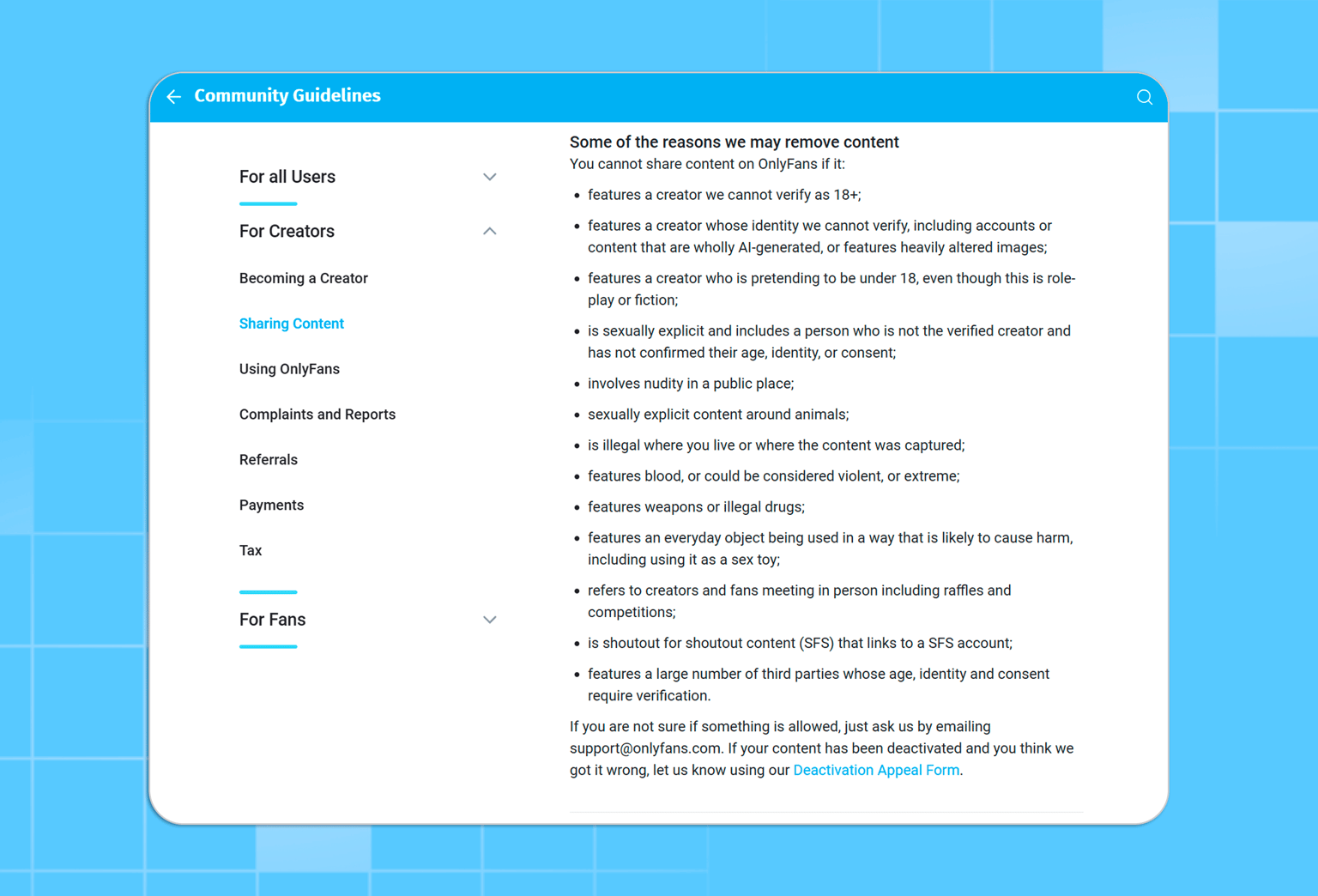 Content that is prohibited from being published on OnlyFans
It's important that agencies take this kind of thing very seriously because if they don't, their reputation could suffer and might even lead to legal action taking place against them (or their clients). Agencies also have to consider whether uploading certain pictures would make people feel scared or unsafe.
2. Non-Consensual Content and Model Release Form Requirements
In order to prevent non-consensual content from being uploaded, agencies work hard to ensure that all creators have signed model release forms on file.
These forms indicate that everyone involved in a photoshoot has given their consent for the images to be used in a specific manner - and that they have done so willingly (without coercion or undue pressure).
If a form of this type does not exist for previous shoots, it will be necessary to obtain consent retrospectively. Again, agents must ensure that any such consent has been given freely.
3. Weapons, Drugs, and Illegal Activity Content Restrictions
Agencies operate within strict guidelines that include not allowing uploads of weapons, drugs, or any type of illegal activity.
If a post or profile picture depicts guns, ammunition, or drugs, it will be reported and taken down. Any content promoting or detailing illegal behavior will not only be flagged but also forwarded on to the appropriate authorities.
4. Violence, Gore, and Extreme Fetish Limitations
Agencies responsible for adult content have to be very careful about violence, gore, and extreme fetishes. When examining uploads, they need to be mindful of line crossings that might violate the OnlyFans terms of service.
While material showing extreme violence or gory scenes is obviously forbidden, agency personnel also need to be vigilant on matters involving photos or videos classified as having high thematic intensity concerns.
5. Public Nudity and Location-Based Content Violations
Public nudity and sensitive location violations present agencies with difficult challenges. Creators are advised that backdrops free of problem areas are preferable. Any infraction could mean fines and/or account suspension.
6. Bestiality, Incest, and Taboo Content Policies
Bestiality-related, incest-related, or other taboo material is strictly forbidden and must not be attempted by creators. Agencies are responsible for ensuring that no such content is uploaded; if this occurs, legal action could follow.
7. Bodily Fluids and Restricted Sexual Acts
Agencies need to stay up-to-date with which types of bodily fluids are allowed; if in doubt, creators should err on the side of caution. The OnlyFans terms of service document explicitly states what constitutes permitted sexual acts.
Collaboration, Copyright, and Content Licensing: Agency Legal Support
Agencies working within the OnlyFans platform require robust legal underpinnings that encompass both copyright and licensing issues, as well as being able to offer creators strong support regarding these matters.
How Agencies Protect Creator Intellectual Property Rights
Fortunately for creators, OnlyFans' Terms of Service (TOS) clearly state that all content uploaded by a creator remains their intellectual property.
By posting content on OnlyFans, creators are granting the platform a license to display their work to subscribers who have paid to view it.
Unfortunately, however, that doesn't mean their work is safe from thieves. Subscribers often leak content onto piracy websites, which can reduce the value of a creator's OnlyFans subscription.
It's an agency's job to police this kind of activity and take steps to stop it, such as issuing DMCA takedown notices to sites hosting stolen content.
To do this effectively, agencies must constantly monitor the web for leaks.
Model Release Forms and Collaboration Documentation Requirements
If you're shooting with someone other than yourself, you'll need a model release form. OnlyFans provides a template you can use. You'll need the model's full legal name and a government-issued photo ID, which you'll need to submit to OnlyFans for approval.
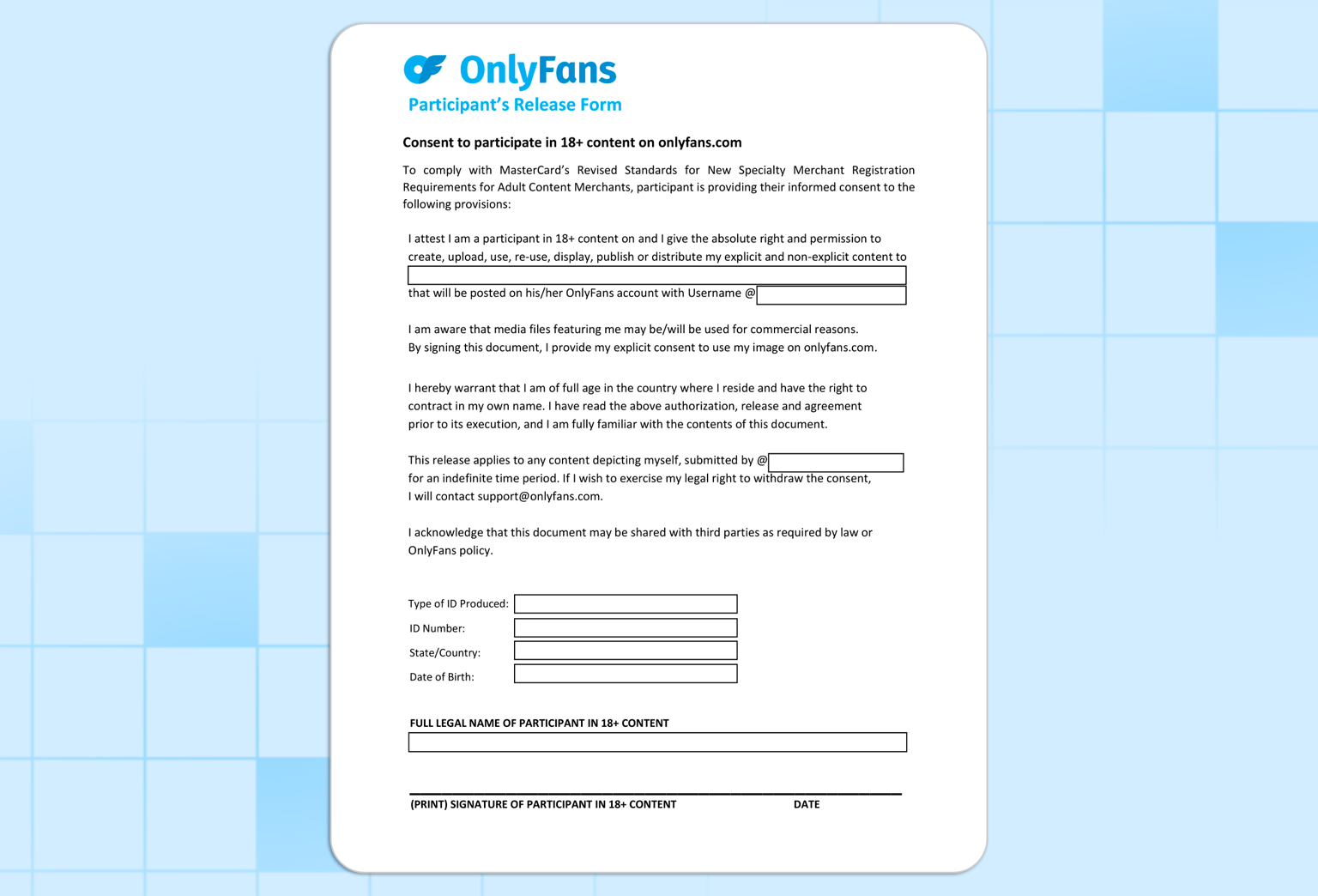 OnlyFans participant release form
If the person you're shooting with is also an OnlyFans creator, you'll need to tag their account in your post (assuming they've given you permission first).
Financial Terms and Payment Policies: OF Agency Management Systems
OnlyFans' TOS outlines various rules relating to money and finances. These include the platform's 80/20 revenue-sharing split, the duration of payment holds before being sent out, and its policies on chargebacks and refunds.
Agencies need systems in place for tracking earnings, as well as any business expenses or tax deductions to which their creators may be entitled. Because OnlyFans views its creators as independent contractors, they're responsible for their own taxes.
Agencies should help them stay compliant with tax laws by keeping accurate records of their income (including tips) and expenses that can be deducted from their taxable income.
Account Management and TOS Updates: Agency Compliance Protocols
OnlyFans' TOS includes rules about account creation and maintenance. To create an account, you must be at least 18 years old and provide photo ID. This age restriction is strictly enforced, with no exceptions allowed. It's also against the rules to have more than one active creator account at any given time.
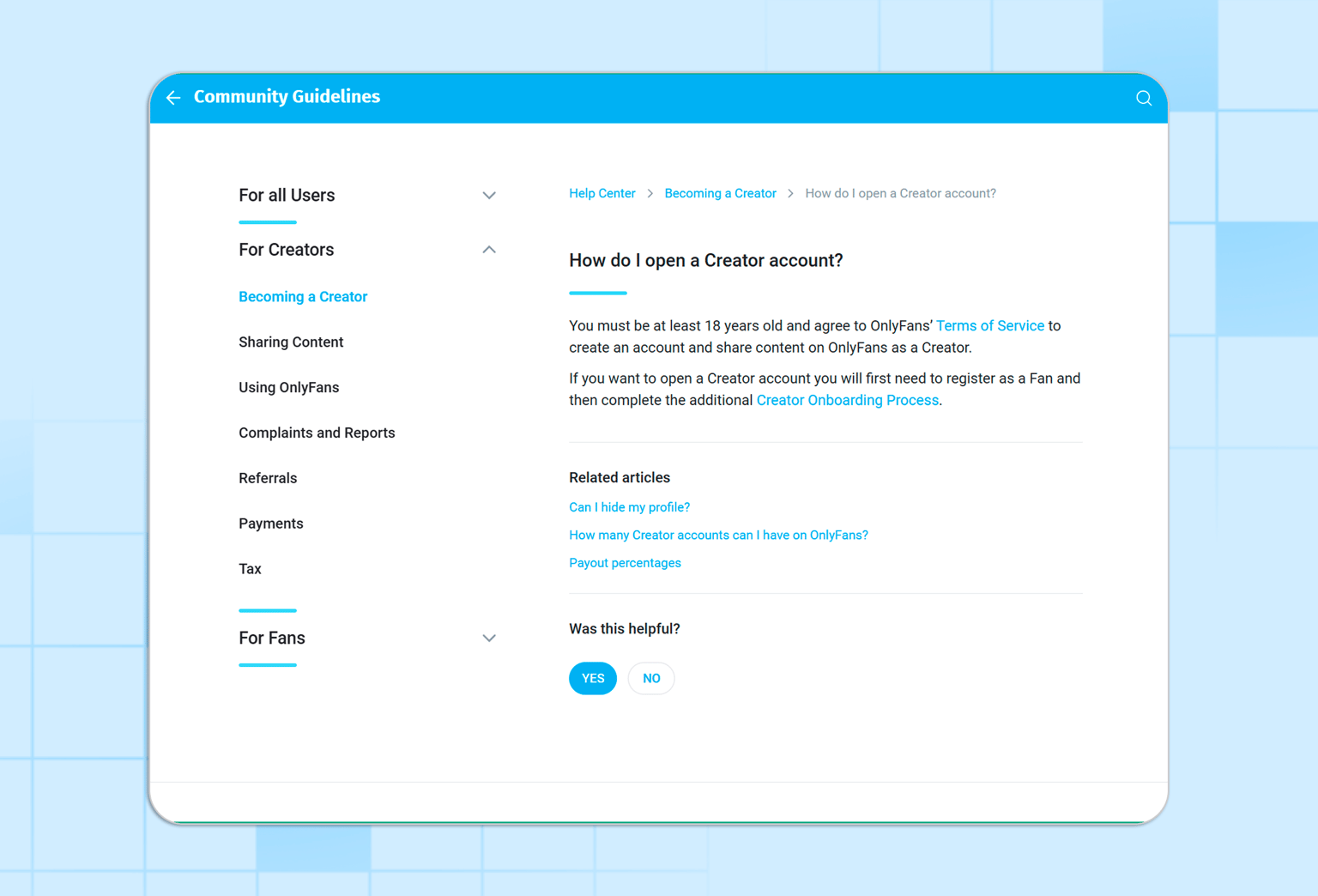 Requirements for users who want to open a Creator account
Agencies need systems in place to keep track of TOS updates, as well as any changes to their creators' settings or account status.
If there's a problem with your account, OnlyFans may freeze your payments until it's resolved - so make sure someone at your agency is always available to deal with these kinds of issues!
OnlyFans requires creators to verify they're real people by occasionally taking a selfie of themselves (they're given a pop-up request to do so). To comply with this requirement, you need to have someone available to take these selfies 24/7.
OnlyFans can change its Terms of Service at any time and will post the new rules on its site. Creators then have 30 days to comply before the new rules go into effect.
By continuing to use OnlyFans after this period, they're agreeing to abide by the new Terms of Service. It's up to you to read any updates, ensure you understand their implications for your business, and advise your creators accordingly.
Frequently Asked Questions on OnlyFans Terms of Service
1. What happens if a creator managed by an agency breaks the OnlyFans TOS?
If a creator breaches the OnlyFans TOS, they'll face penalties including warnings, removal of content, temporary suspension, or even permanent banning of their account.
While agencies aren't held responsible for these infractions, they do have a vested interest in ensuring that their creators follow the rules, as a creator's breach of the rules could harm the agency financially and reflect poorly on it.
2. How do agencies stop creators from using forbidden words?
A good agency will keep a "forbidden words" list based on OnlyFans' TOS and make sure that all chatters, captions, and DMs posted by its creators don't include any of these words. This is an important service for creators because many of the words on the list relate to activities such as solicitation and illegal behavior.
3. Can an agency help a creator who has had their OnlyFans account wrongly suspended?
Agencies can also assist with this. Because they have more experience dealing with OnlyFans than most creators do, they can put together a professional appeal that has a better chance of success. This includes contacting OnlyFans customer support and citing specific parts of the TOS that show that the creator did not do anything wrong.
4. What rights does a creator have to their content when working with an agency?
Creators always retain ownership of their content and the rights to it. When they join OnlyFans, they grant the site a license to host and display their content, but this does not affect their ownership. Agencies need to be very clear in their contracts about what rights they have in relation to creators' content and how they're allowed to use it.
Conclusion
In a nutshell, the terms of service of OnlyFans isn't something that you should gloss over. It's actually the foundation upon which your business is built. You don't have to be a lawyer, but you do have to know your stuff and be an expert in this area.
As an agency, your job is to allow the creators to focus on being creative while you take care of the business side of things. That means you need to know how to keep their accounts safe. The best way to do that is to read, understand, and comply with the terms of service.